Home/Experience
Internship & Leadership Timeline

Experience.

Three internships in mining, power and investment, and four years of student leadership — what each role actually involved, and what it changed about how I think.

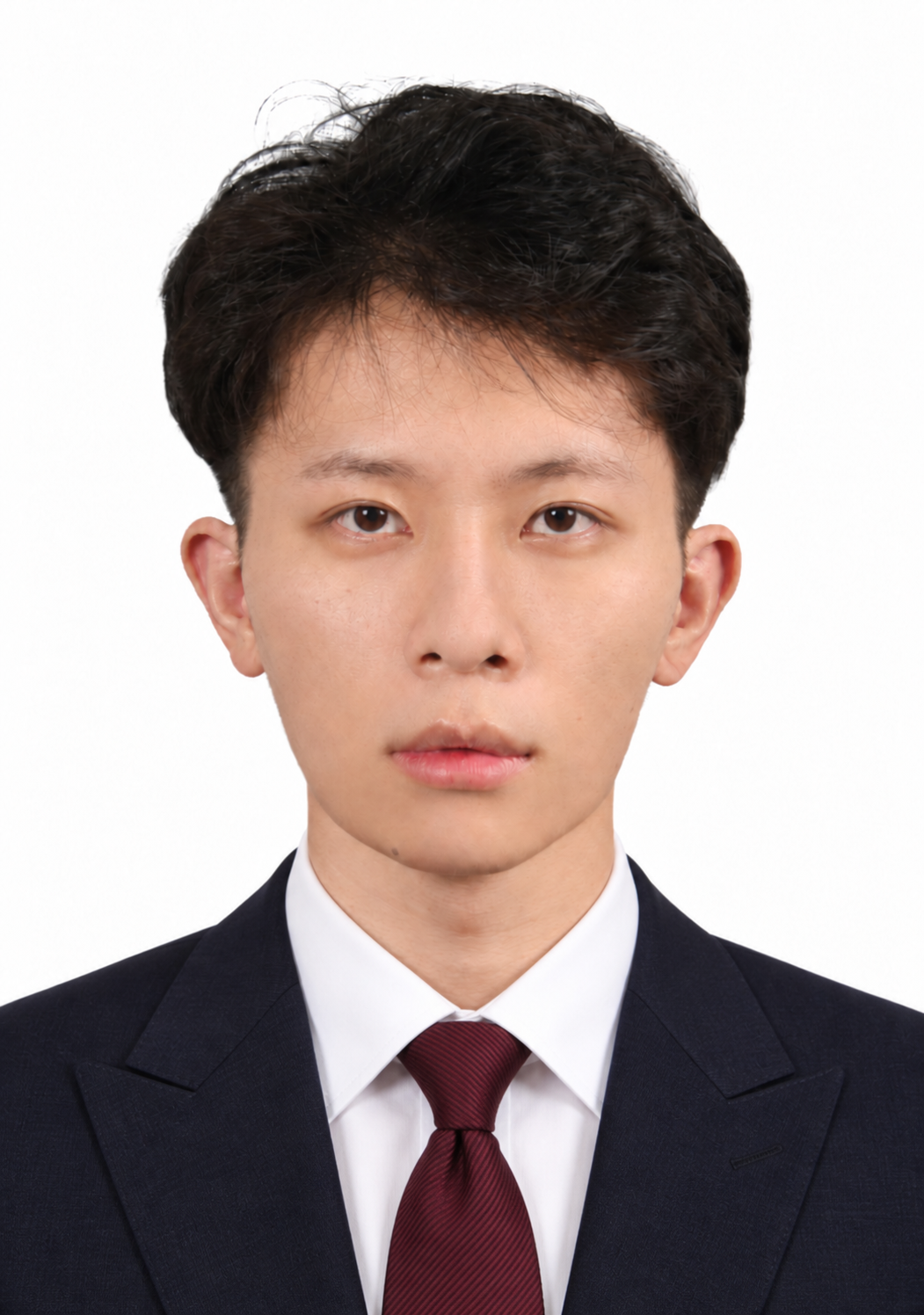
Portrait of Jiayu Hu
Jiayu Hu
01 Reverse Chronological
Sep. 2026 – Present Sydney, NSW, Australia · Remote

Research Assistant

Vecton AI Pty Ltd
  • Working on retrieval-augmented generation and LLM agent development, progressing from baseline to advanced RAG (query rewriting, hybrid BM25 and vector retrieval, reranking, RAG evaluation) and on to tool calling, agent memory and multi-agent workflows, using FastAPI, LangChain and vector databases.
  • Strengthening the model-level foundations behind this work, from tokenization, Transformer architecture and training systems to post-training, alongside hands-on study of attention and sampling in GPT-2.
RAG AI Agents LLMs LangChain FastAPI Transformers
May 2026 – Present Sydney, NSW, Australia · Remote

Student Researcher

University of Sydney RAIDS Lab · Supervised by Dr Zhengyi Yang
  • Extended Zherui Wang’s ESG extraction and scoring pipeline with reproducible Python diagnostics, comparing model outputs with human-corrected annotations across 53 reports from 37 Australian-listed companies.
  • Analysed item-level agreement and error patterns, examining how extraction discrepancies propagate into report-level scores and rankings across AASB S1/S2, GRI and SASB.
  • Developed a blind-annotation protocol and supporting scripts for annotator calibration, agreement assessment and adjudication, including 300 items assigned to two independent annotators.
  • Reviewed EulerESG’s end-to-end workflow and proposed technical improvements, alongside contributions to manuscript revision (IEEE ICDM 2026 Demo Track, accepted).
  • Developing a research proposal on ontology-guided ESG assessment, focusing on evidence grounding and potential cross-dimension biases in LLM-generated evaluations.
53
disclosure reports benchmarked
37
Australian-listed companies
300
items double-annotated
Python LLMs RAG Information Retrieval Knowledge Graphs
Jun. 2024 – Sep. 2024 Jinchang, Gansu, China

Financial Analysis Intern

Jinchuan Group Co., Ltd.
  • Contributed drafting and analysis to board-level meeting materials, covering a cross-border joint-venture proposal and a restructuring investment proposal for a copper smelting company — a first encounter with offshore holding structures and with how joint ventures and M&A restructurings are actually assembled.
  • Worked through the smelter proposal in detail: process flows and cost accounting in smelting, settlement conventions for base and precious metals, identification of related-party transactions, and the statement preparation that follows from them.
  • Cleaned, matched and consolidated tendering, supplier-quotation, inventory, fixed-asset depreciation and project-cost data in Python (pandas, NumPy); ran budget-versus-actual variance analysis to isolate the main deviations and traced anomalous movements in procurement prices, material consumption and inventory.
  • Automated the recurring cleaning, aggregation, reconciliation and depreciation calculations, and maintained a project data ledger that standardised, matched and cross-verified records drawn from different business documents.
~18
engineering projects covered
40,000+
records cleaned and matched
~70%
less data-processing time
What it taught me

Jinchuan was where I stopped treating financial analysis as something that happens on the statements. Whether it was a group-level acquisition or a project-level cost variance, the judgment that mattered came from reading the transaction structure, the business process and the numbers together — Python made the data tractable, but tracing an anomalous figure back to a specific operational mechanism was the hard part.

Python pandas NumPy Matplotlib Excel Variance Analysis Deal Documentation
Jun. 2022 – Sep. 2022 Jinchang, Gansu, China

Capital Budgeting Intern

State Grid Corporation of China
  • Compiled and reconciled equipment and asset ledgers for 110kV and 35kV substation facilities and 10kV distribution works, verifying fixed-asset and grid-equipment records, computing depreciation from original cost, asset class and useful life, and analysing overhaul, operations-and-maintenance and distribution-upgrade costs.
  • Processed budget, contract, procurement, asset and expense line items across transmission, technical-upgrade and overhaul projects; ran variance analysis of budget, cumulative input and actual spend by material, equipment, maintenance and other categories, and automated the recurring merge–clean–depreciate–aggregate cycle in Python.
  • Tracked 15+ policy and industry sources on the unified national electricity market, transmission and distribution pricing, renewable absorption, green power trading and inter-provincial transmission, and combined them with installed-capacity, generation and export data for a region where renewables exceed 60% of installed capacity, producing internal research notes.
12
grid & overhaul projects
25,000+
budget & contract line items
~1,500
asset records depreciated
3–4 h → 1–1.5 h
recurring reconciliation cycle
The call I made

The binding constraint on renewable growth in the region had already moved from generation capacity to grid absorption and system flexibility — so decarbonisation-driven power investment had to fund transmission, storage and inter-regional trading capability, not just new wind and solar.

What it taught me

Financial and data analysis cannot be detached from how a business actually operates: depreciation, project cost and capital expenditure all correspond to physical grid assets and engineering activity, while macro policy feeds back through interconnection, grid investment and absorption mechanisms. This was where I moved from organising data to asking what the data meant.

Python Excel Asset Ledgers Depreciation Variance Analysis Policy Research
Jun. 2021 – Sep. 2021 Lanzhou, Gansu, China

Investment Research Intern

Gansu Electric Power Investment Group
  • Supported the preparation of a project proposal for a real-estate development, drafting portions of the investment estimate and financing plan, the financial evaluation, and the risk analysis; assisted in building the financial model from construction scale, cost and sales assumptions — total investment, funding requirement, revenue, cash flow, NPV, IRR and payback — and helped run sensitivity analysis on the key parameters.
  • Supported the group's acquisition of an equity stake in a European power utility, organising the target's operating, financial and shareholding materials and following the internal decision process — a first look at cross-border deal structure, valuation, approval procedures and post-investment return logic.
  • Supported an M&A and restructuring transaction, compiling both parties' business, asset and financial information, historical operating data and ownership structure, and contributing to preliminary analysis of investment value, potential synergies and principal transaction risks.
  • Researched the clean-energy and solar PV sector — installed capacity, industrial policy, project capex, tariff mechanisms and competition — and assessed regional resource endowment, grid absorption and project returns under China's dual-carbon targets.
What it taught me

This was the first time I saw how an investment case is actually built and defended, and how differently a project investment and an equity acquisition have to be analysed. It also left me with a habit I still use: tracing how policy and industry variables travel through firm behaviour into cash flows, capital expenditure and returns — which is more or less where my later interest in ESG, investment efficiency and disclosure came from.

Financial Modelling NPV / IRR Sensitivity Analysis Cross-Border M&A Industry Research
Sep. 2021 – May. 2025 Zhuhai, Guangdong, China

Student Organization Lead

Student Leadership & Community Engagement, BNBU
Concurrent with undergraduate study
  • Led a student network of approximately 200 members across Accounting, E-commerce, and Innovation & Entrepreneurship, serving in the role for four consecutive years.
  • Managed day-to-day operations, including meetings, internal communications, documentation, and coordination with faculty and university stakeholders.
  • Maintained membership records and coordinated onboarding, internal reviews, member development, and recognition processes.
  • Planned and delivered volunteer initiatives, community engagement programmes, and campus cultural activities across three student branches.
What it taught me

Leading peers without formal authority taught me that effective coordination depends less on giving instructions than on earning trust, aligning expectations, and following through. When decisions affected members directly, I learned to value transparent processes and consistent standards as much as the outcome.

~200 members 3 branches 4 years, same post

Public portfolio note. Internal or confidential information from employer work — counterparties, project names, deal terms and monetary values — is intentionally not published here. Organisations are named as they appear on my CV; the figures above describe the scale of my own work products and contain no confidential data.

← Back to home